
Ajmer Sharif Deg Complete Guide for Devotees
The tradition of ajmer sharif deg is one of the most respected and meaningful practices at the dargah of Hazrat Khwaja Moinuddin Chishti (R.A.). Every year, thousands of devotees come with faith to take part in this sacred offering. Some visit in person, while others choose online ways to participate in this spiritual act.
This offering is not only about preparing food. It reflects love, gratitude, and service to humanity. Devotees believe that taking part in Deg niyaz brings peace, blessings, and spiritual connection with Khwaja Garib Nawaz.
What is Ajmer Sharif Deg and Why It Matters
The Ajmer Sharif Deg refers to large sacred cauldrons used to cook sweet rice, also known as niyaz or tabarruk. This food is then distributed among visitors at the dargah without any difference of status, religion, or background.
This tradition is deeply connected with the teachings of Hazrat Khwaja Moinuddin Chishti (R.A.), who always guided people towards kindness, equality, and helping others.
People usually offer deg as:
- A way to fulfill a mannat
- A gesture of gratitude after a wish is completed
- A spiritual offering for family and loved ones
- A form of nazrana or offering at the dargah
This makes the deg tradition both personal and community-focused at the same time.
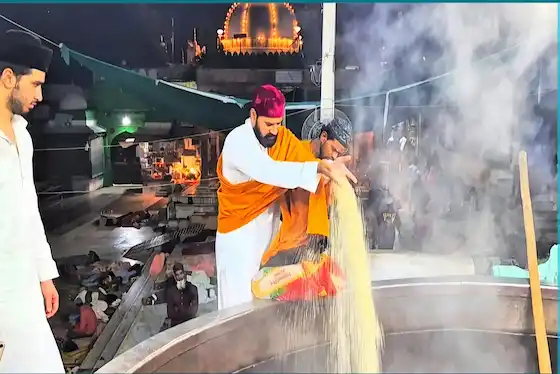
History of Ajmer Sharif Deg from Mughal Era
The history of this sacred tradition goes back to the time of Mughal emperors. Emperor Akbar introduced the Badi Deg as a mark of respect and devotion. Later, Emperor Jahangir added the Choti Deg so that more people could benefit from the langar.
Since then, the practice has continued without interruption. Even today, the same method of preparing sweet rice is followed with respect and care.
The continuation of this tradition shows how strong the connection is between devotees and the teachings of Khwaja Garib Nawaz.
Badi and Choti Deg Capacity and Cost
Badi Deg (Big Cauldron)
The Badi Degh is one of the largest cooking vessels used at any spiritual place. It can cook around 4800 kg of sweet rice at one time.
- Capacity: approx. 4800 kg
- Serves: thousands of people
- Offering amount: depends on ingredients and scale
Choti Deg (Small Cauldron)
The Choti Degh is smaller but equally important. It is often chosen by families or smaller groups.
- Capacity: approx. 2400 kg
- Serves: large number of devotees
- Offering amount: based on preparation and quantity
Both degs are used throughout the year and especially during Urs and special days.
Ingredients Used in Ajmer Dargah Deg Niyaz
The preparation of degs is simple but rich in meaning. Only vegetarian ingredients are used so that everyone can take part in the blessing.
Common ingredients include:
- Rice
- Sugar
- Pure ghee
- Saffron
- Almonds, cashews, and dry fruits
- Raisins and cardamom
This sweet rice, often called zarda, is prepared with care and then shared as tabarruk.
Ajmer Deg Booking Online and Process
Today, many devotees search for ajmer deg booking online so they can participate even if they are not able to travel.
The process is simple and guided properly:
- Choose between Badi Degh or Choti Degs
- Decide the type of offering or contribution
- Share your details and intention
- The degs is prepared on your behalf
- Fateha and dua are performed
- Niyaz is distributed among devotees
For guidance and booking, you can contact: +91-9982834388
You can also visit the official platform:
https://www.ajmersharifdargahlive.com/
This ensures that your offering is handled respectfully and in the correct manner.

Spiritual Meaning of Mannat Deg at Ajmer Dargah
Mannat and Its Importance
The concept of mannat degs is very simple but powerful. When a person’s prayer is fulfilled, they offer a dehg as a sign of gratitude.
This act reflects:
- Faith in the blessings of Khwaja Garib Nawaz
- A desire to share happiness with others
- A way to help people through food distribution
It is believed that such offerings bring peace and open doors for future blessings.
Deg Lootna Tradition and Its Symbolism
One unique part of the ajmer dargah degh tradition is known as degh lootna. After the food is prepared, devotees gather to receive tabarruk directly from the degs.
This practice shows:
- Equality among all people
- Joy of sharing blessings
- Unity in spiritual gatherings
It is not just a ritual but a moment where everyone feels connected.
Role of Khadims and Gaddi Nasheen
The preparation and offering of degs is carried out under the guidance of Khadims and the Gaddi Nasheen.
Their responsibilities include:
- Performing fateha and dua
- Arranging the degh preparation
- Guiding devotees in rituals
- Ensuring traditions are followed properly
Their role keeps the authenticity of the dargah traditions alive.
During Urs and Special Days
During Urs Sharif, the number of degs offerings increases greatly. Thousands of devotees gather and take part in this sacred practice.
Special occasions include:
- Urs Sharif
- Monthly Chatti Sharif
- Personal celebrations and prayers
The sight of thousands of people sharing food together is one of the most meaningful experiences at the dargah.
Why People Offer Deg at Ajmer Sharif
People from different backgrounds take part in this tradition for many reasons:
- To seek blessings and guidance
- To express gratitude
- To help others through food distribution
- To stay connected with spiritual teachings
The act of offering degs reflects humility and service, which are core teachings of Hazrat Khwaja Moinuddin Chishti (R.A.).
Final Thoughts on Ajmer Dargah Deg
The tradition of ajmer dargah degs is not just about food. It is about intention, faith, and sharing. It connects people across cultures and brings everyone together in one place with a common purpose.
Whether someone visits Ajmer Sharif in person or participates from a distance, the blessing of this offering reaches the heart.
For proper guidance and booking, always use trusted sources and contact:
+91-9982834388
This ensures your offering is performed respectfully and according to tradition.